
After tree removal, many Maryland homeowners wonder what to do with a tree stump that is still sitting in the yard. At first, a leftover stump may not seem like a big problem. But over time, it can affect mowing, safety, pests, curb appeal, and future landscaping plans.
In Maryland, humid summers, seasonal rain, shaded yards, and wooded properties can also speed up stump decay. Some stumps can become creative yard features. Others may need stump grinding or tree stump removal when they start causing problems.
Can You Leave a Tree Stump in the Ground?
You can leave a tree stump in the ground, especially if it sits far from walkways, driveways, play areas, or landscaping beds. But leaving it in place has risks.
As the stump breaks down, it may attract insects, soften unevenly, or make lawn care harder. Maryland’s moisture and changing seasons can make these problems show up faster. If the stump sits in a part of the yard you use often, it is worth dealing with before it becomes harder to manage.
Creative Things You Can Do with an Old Tree Stump
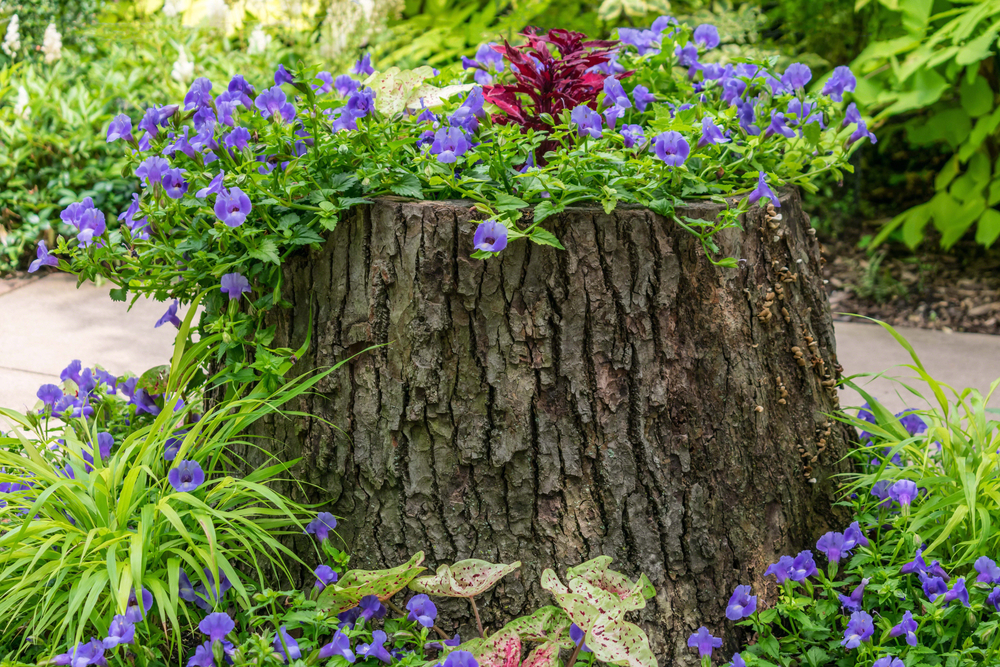
Not every stump needs to go right away. Many homeowners search for what to do with tree stumps because they want a practical or creative option.
If the stump is solid and safely located, you can turn it into:
- a planter
- a garden accent
- a birdbath base
- a small outdoor table
- a fairy garden or painted yard feature
These ideas work best when the stump is away from high-traffic areas and does not show signs of rot, pests, sharp edges, or loose bark. If the stump is already soft, unstable, or attracting insects, stump grinding may be the safer choice.
When a Tree Stump Becomes a Problem
A tree stump can cause more trouble than homeowners expect. Even after the tree is gone, the remaining stump and roots can still affect how you use the yard. A decaying stump can attract ants, beetles, termites, and other wood-boring insects. It can also become a tripping hazard when grass grows around it.
Stumps can also make mowing harder, damage equipment, block new landscaping, or send up unwanted shoots from the roots. If the stump sits in an active part of your Maryland yard, removing or grinding it down can help restore usable space.
Stump Grinding vs. Stump Removal
Homeowners often use stump grinding and stump removal as if they mean the same thing, but they are different.
Stump grinding grinds the visible stump below the soil surface. The roots usually stay underground and decay naturally over time.
Stump removal removes the stump and more of the root system. This process can involve more digging, more yard disturbance, and a larger hole to fill.
For homeowners researching tree stump removal in Maryland, stump grinding is often the less disruptive option. It works well when the goal is to improve safety, make mowing easier, or prepare the area for grass or landscaping. Full stump removal may make more sense if you are planning construction, major grading, or planting where old roots would interfere.
Why Stump Grinding Is Often a Practical Option
Stump work can look simple, but old stumps are often tougher than they appear. Dense wood, spreading roots, and uneven soil can make DIY removal difficult and risky. Stump grinding gives homeowners a cleaner way to handle many leftover stumps without tearing up a large section of the yard.
It can help:
- remove the visible stump
- reduce tripping hazards
- make mowing easier
- improve curb appeal
- prepare the area for soil, grass, mulch, or landscaping
For Maryland properties with mature trees, fences, patios, slopes, or compact yards, it is smart to evaluate the stump before choosing the next step.
What to Do After Stump Grinding
After stump grinding, you will usually have wood chips and soil where the stump used to be. If you want grass, remove extra chips, add topsoil, level the area, and reseed. If you want a garden bed, some chips may work as mulch depending on their condition.
Avoid planting a new tree directly in the same spot without guidance. Old roots, wood material, and changed soil conditions can affect new growth.
Choosing the Best Option for Your Maryland Yard
The best choice depends on where the stump is and how it affects your yard. If the stump is solid, out of the way, and part of your landscape design, you may be able to keep it for a while.
But if it makes mowing harder, creates a tripping risk, attracts pests, shows decay, or blocks future landscaping, grinding it down is usually the more practical next step.
Need Advice About a Tree Stump in Maryland?
If you are unsure what to do with a tree stump after tree removal, Nelson Tree Specialist can help you understand your options. A local tree care professional can look at the stump’s location, condition, and surrounding yard to determine whether it makes sense to leave it, reuse it, grind it, or remove it.
Contact us if you need help evaluating a leftover tree stump or planning the next step for your Maryland yard.