
Maryland’s trees take a beating in a single season. Humid summers speed up insect activity, sudden storms tear branches and open fresh wounds, and dry stretches stress roots and weaken natural defenses. When pests show up, they often take advantage of a tree that already struggles.
The good news is that most infestations stay manageable when you catch them early. Use this guide to spot the warning signs, recognize common Maryland tree pests, and take the next right step before the damage snowballs.
Why Tree Pests Spread Quickly in Maryland
Pests don’t always “attack” healthy trees first. They often move into trees already under pressure. In Maryland, that stress usually comes from heat and humidity, storm damage, drought, and dense tree cover in neighborhoods and wooded lots where pests can move from host to host.
Don’t fall into the “wait and see” trap. Early action protects your canopy, reduces safety risk, and usually costs less than late-stage fixes.
Quick Symptom Check: Signs Homeowners Miss Most
If you notice one sign, take a closer look. If you notice two or more, schedule a professional diagnosis.
- Small holes in the bark plus sawdust-like debris around the base of the trunk
- Branch dieback, especially starting at the tips or high in the crown
- Bark splitting or vertical cracks, especially on stressed trees
- Sticky residue on leaves, cars, decks, or patio furniture, often followed by black sooty mold
- Heavy woodpecker activity focused on one section of the trunk
- Defoliation that repeats season after season, especially on oaks
These clues don’t always point to one pest. They do tell you something is happening now, not “maybe later.”
What Insect Is Building a Web in My Tree?
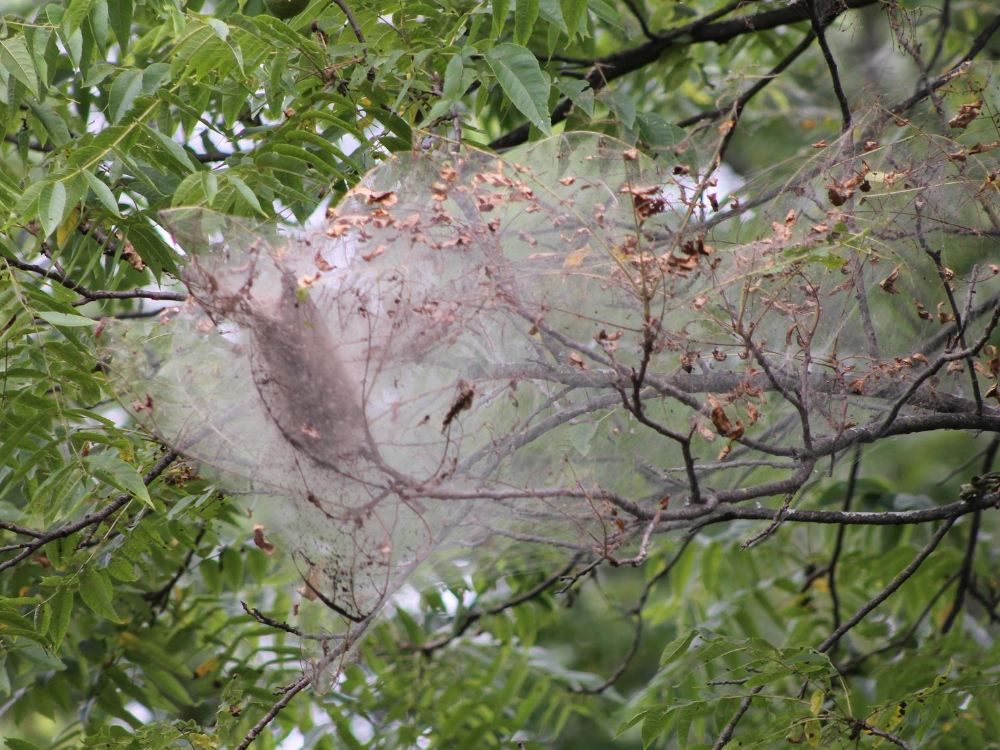
Webbing in trees is one of the most common reasons homeowners call an arborist. In Maryland, the most likely causes are fall webworms and eastern tent caterpillars, not spiders. These insects build visible webs to protect their larvae while they feed on leaves. Webworms typically appear later in summer and enclose branches at the ends of limbs, while tent caterpillars build dense webs in branch crotches in early spring.
While a single season of webbing rarely kills a healthy tree, repeated defoliation or heavy web coverage can stress already weakened trees and make them more vulnerable to other pests and disease. Knowing what insect is building a web in your tree helps determine whether monitoring is enough or whether professional treatment is needed.
Web-building insects are only one piece of a larger pest picture, especially in Maryland’s climate.
Common Tree Pests in Maryland and What They Do
Borers: The “Silent” Killers
Borers tunnel under the bark and disrupt how the tree moves water and nutrients. You often notice the damage late because the real activity happens inside the wood.
You might see small holes in the bark, reddish or sawdust-like debris stuck in bark crevices, or thinning at the top of the tree. When borers take hold in a stressed tree, decline can accelerate quickly and turn into a safety issue as wood strength weakens.
What to do: don’t guess. Borers vary by tree species and timing. A proper diagnosis matters before any treatment plan makes sense.
Emerald ash borer (EAB) on ash trees
If you have ash trees in Maryland, take EAB seriously. Infestations can progress fast and create a dangerous decline.
Watch for canopy dieback starting near the top, bark splits, increased woodpecker activity, and small exit holes on the trunk. Homeowners often notice the tree “looking thin” one year and dramatically worse the next.
What to do: confirm the issue early. An arborist can help you decide between treatment and removal based on tree health, size, location, and risk to structures.
Spongy Moth (formerly “Gypsy Moth”)
Spongy moth remains a major defoliator in Maryland, especially for oaks. The tricky part is that one season of defoliation doesn’t always kill a tree. Repeated defoliation does. When a tree loses leaves year after year, it burns through stored energy and becomes far more vulnerable to other pests and disease.
What to do: timing matters. Early monitoring and targeted management beat late-season reaction after the canopy is already stripped.
Spotted Lanternfly
Spotted lanternfly often shows up as a “mess problem” first. Homeowners notice sticky buildup and sooty mold before they even see the insects.
If you notice heavy honeydew, black film on leaves or surfaces, and clusters of insects, you likely need a management plan focused on reducing nuisance and stress on the plant. You can’t erase lanternfly presence everywhere, but you can limit damage and reduce the “swarm” effect around your home.
What to do: document and manage. Avoid quick DIY spraying without a plan, because it often misses timing and can harm beneficial insects.
Sap-Feeders (Aphids and Scale)
Aphids and scale weaken trees gradually, then invite secondary problems. You’ll typically notice sticky honeydew, ant activity, and sooty mold. People often treat the mold, but the real issue is the pest producing the honeydew.
What to do: identify the pest first, then reduce populations using the least disruptive approach. That helps beneficial insects do their job and keeps the tree from staying stuck in a stress cycle.
Pest Damage vs. Disease vs. Stress: Don’t Guess
Homeowners often treat the wrong problem because symptoms overlap.
Pests often leave physical clues like frass, exit holes, egg masses, honeydew, and chewing damage. Disease tends to create patterned spotting, cankers, or persistent leaf issues across the canopy. Stress from drought, compaction, root damage, or construction can make any pest problem worse, even if pests didn’t start the decline.
When you misdiagnose, you lose time, and time drives spread.
What to Do Now If You Suspect a Pest Infestation
Step 1: Inspect safely in 10 minutes
Walk a full circle around the tree. Check the trunk from ground level to eye level. Look at the base for debris or frass. Scan the canopy for thinning, dead tips, or bare patches. Flip a few leaves and look at the underside for clusters, residue, or mold.
If a limb hangs over a driveway, roof, deck, or play area, treat it as a safety issue.
Step 2: Document what you see
Take clear photos of the whole canopy (from two angles), close-ups of the trunk where damage appears, the base of the tree, and a few leaves (top and underside). This helps an arborist diagnose faster and track progression.
Step 3: Avoid spreading the problem
Don’t move firewood from one property to another. Don’t haul suspicious debris to another site unless you contain it properly. Pests travel more often through human movement than homeowners realize.
Step 4: Schedule a professional diagnosis
Arborists match the pest to the right timing and response. That’s how you stop “one tree” from becoming “three trees.”
Prevention Tips that Actually Work in Maryland
You can’t control every insect, but you can lower your risk.
Start by reducing stress. Water deeply during dry periods and protect the root zone from compaction. Prune with a purpose by removing deadwood and improving airflow, but avoid over-pruning that adds stress. Inspect trees in early spring and again in late summer when drought and heat pressure tend to show.
If you see borer-style clues (holes, frass, and dieback), treat it as urgent. And if you have ash trees, monitor them yearly, even if they look healthy today.
Call an Arborist Right Away If You See These Red Flags
Call for help quickly if you notice sudden canopy decline, major bark splitting paired with dieback, frass and exit holes around the trunk base, or signs of EAB on ash. Also call if the tree leans, cracks, or sits within striking distance of your home.
Get Help Before the Infestation Spreads
If your tree shows thinning canopy, dieback, frass, sticky residue, or bark splits, don’t wait for the problem to “declare itself.” Early diagnosis gives your tree the best chance to recover and helps protect the rest of your landscape.
Nelson Tree Specialist provides professional tree inspections, pest and tree health support, pruning, removals, and emergency response across Maryland. Call (301) 854-2218 or request a free quote today.