
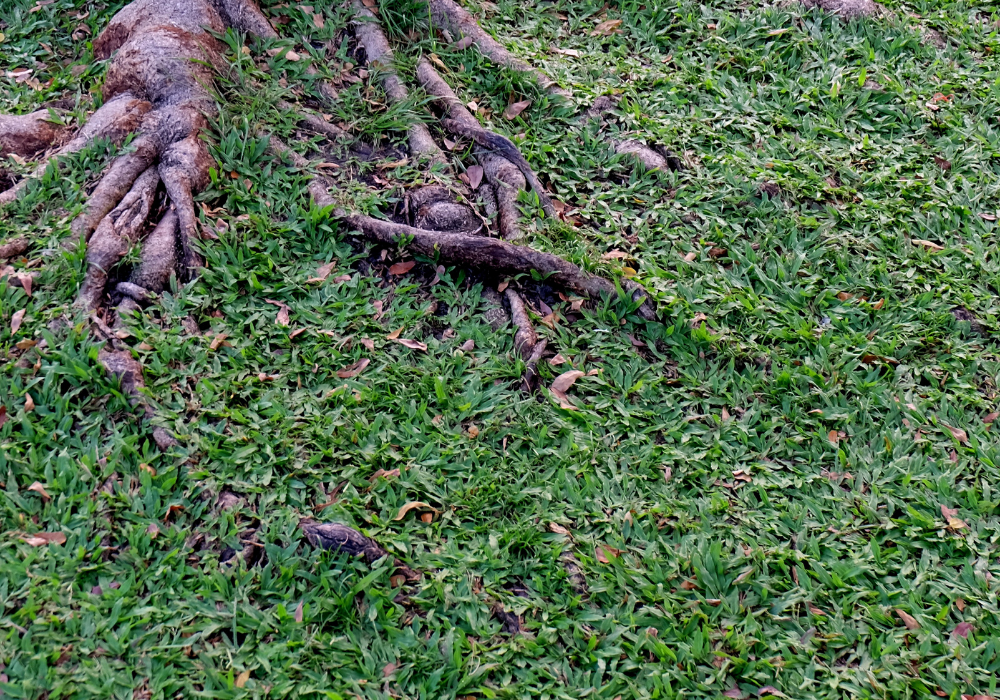
Tree roots above ground can make a yard harder to maintain, leaving homeowners wondering whether something is wrong with the tree. In many Maryland landscapes, exposed roots appear around mature trees, sloped lawns, and areas where rain gradually wears away the soil. While exposed roots are often a normal part of growth, they can become a problem if they are damaged or left exposed as erosion gets worse.
Why Are Tree Roots Above Ground?
Tree roots often grow close to the surface because that is where they can access oxygen, moisture, and nutrients. Many trees develop broad, shallow root systems, and as they mature, some roots naturally become more visible. Older shade trees often develop more noticeable surface roots as they expand and anchor themselves over time.
This is common in Maryland, where heavy rain, summer heat, compacted soil, and runoff can expose roots over time. In many cases, tree roots above ground reflect growing conditions and natural root patterns, not immediate tree decline.
Some yards also make the issue more noticeable than others. Sloped areas, thin topsoil, and places with repeated runoff can all leave roots more exposed as the landscape changes.
Are Exposed Tree Roots a Problem?
They do not always signal a serious issue, but they can become one if they are damaged or ignored. When roots remain exposed, they are more vulnerable to mowers, string trimmers, foot traffic, and other everyday stress.
They can also create practical problems in the yard. Surface roots can make mowing more difficult, create uneven walking areas, and leave bare patches where grass struggles to grow. Repeated damage can weaken the tree over time.
What to Do About Tree Roots Above Ground
The best way to handle tree roots above ground is to protect them, not force them out of sight. In many cases, a mulch ring around the base of the tree works well. Mulch helps retain moisture, protects the root zone, and reduces the chance of damage from lawn equipment.
A few of the best ways to protect exposed roots include:
- Adding a proper mulch ring around the tree
- Reducing mower and string trimmer contact
- Limiting heavy foot traffic over the root zone
- Correcting drainage or runoff issues if the soil keeps washing away
It also helps to avoid treating the area like a normal patch of lawn. Grass often struggles around exposed roots because it competes with the tree for moisture and nutrients. Giving the tree a protected mulched area usually creates a healthier and easier-to-maintain space.
Avoid cutting exposed roots or covering them with too much soil. Both can create more stress for the tree.
When to Call an Arborist for Exposed Roots
Some exposed roots are manageable, but others deserve a closer look. It is a good idea to call an arborist if you notice:
- roots spreading widely across the yard
- tripping hazards near walkways or outdoor living areas
- roots affecting driveways, sidewalks, or other hard surfaces
- thinning leaves, dead branches, or other signs of decline
You should also get professional guidance before cutting roots, changing the grade around the tree, or starting landscaping work near the base. If you are concerned about exposed tree roots on your property, Nelson Tree Specialist can help you evaluate the tree and recommend the right next steps. Request your free evaluation quote today