
If you are trying to identify a tree in your yard, start with what you can see. Many Maryland properties include a mix of mature shade trees, ornamental plantings, and naturally growing species, so tree identification is not always simple at a glance.
Tree identification matters because different species require different care. The right pruning method, treatment plan, or removal decision often depends on knowing what type of tree you have. In Maryland, trees also deal with humid summers, heavy rain, seasonal storms, and changing temperatures that can affect their health and structure.
This guide explains how tree identification works and highlights several common trees found in Maryland yards.
How to Start Tree Identification in Your Yard
You do not need specialized tools to begin. In many cases, you can narrow it down by looking at a few visible features.
Start with the Leaves
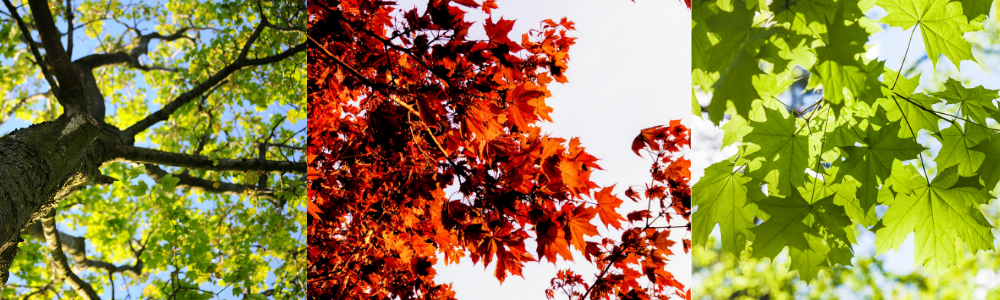
Leaves are one of the easiest ways to begin tree identification. Look at the shape, size, and edges. Some leaves are lobed, some are oval, and some are long and narrow. The edges may be smooth or serrated.
Check how the leaves grow along the branch. Some trees have opposite leaf patterns, while others grow in an alternating pattern. Some have simple leaves, while others have compound leaves made up of smaller leaflets.
In Maryland, fall color can also help you identify a tree in your yard.
Check the Bark and Trunk
Bark can confirm what you see in the leaves, especially when the tree is bare. Look at the bark texture, color, and pattern. Some trees have smooth bark, while others develop ridges, furrows, or peeling sections.
The trunk can also provide clues. A straight single trunk may suggest one growth habit, while multiple stems or irregular form may suggest another.
Look at Tree Shape and Branching
Step back and look at the entire tree. Some trees grow with broad, rounded canopies, while others grow upright or develop a more pyramidal shape.
Branch spacing and canopy density can also help. Trees growing in open Maryland lawns often look different from trees growing near wooded edges.
Check for Seeds, Flowers, or Fruit
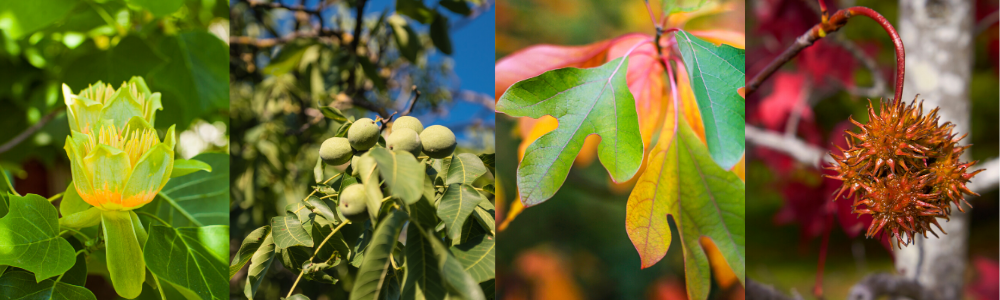
Seeds, flowers, cones, and fruit can make tree identification easier. Acorns often point to oak trees. Winged seeds may indicate maples. Cones help identify pines and other evergreens. Spring blooms can help you recognize dogwoods and other ornamental trees.
Look on the branches and on the ground around the tree for clues.
Common Trees in Maryland Yards
Many Maryland yards include a mix of native trees and landscape favorites. These are some of the most common trees homeowners see.
Oak Trees
Oak trees are common on older properties, wooded lots, and larger Maryland landscapes. They often have lobed leaves, produce acorns, and grow broad canopies.
Maple Trees
Maple trees are common in many Maryland neighborhoods. Homeowners often recognize them by their familiar leaf shape and strong fall color.
Dogwood Trees
Dogwoods are smaller ornamental trees often planted near homes, patios, and front yards. They are known for their spring blooms and layered branching.
Tulip Poplar
Tulip poplar is a common native tree in Maryland. It grows tall, matures quickly, and has a distinctive leaf shape.
Pine and Other Evergreens
Pines and other evergreens have needles instead of broad leaves and produce cones. They often grow along property lines and wooded edges.
What Type of Tree Is in My Yard? Quick Clues for Maryland Homeowners
If you are still unsure, match the most visible features to a likely category.
If the tree has lobed leaves and acorns, it is likely an oak.
If the tree has pointed leaves and bright fall color, it may be a maple.
If the tree has spring blooms and a smaller ornamental shape, it may be a dogwood.
If the tree grows very tall and has a uniquely shaped leaf, it may be a tulip poplar.
If the tree has needles and cones, it is likely a pine or another evergreen.
When to Call an Arborist for Tree Identification
Tree identification is not always straightforward. Young trees, seasonal changes, storm damage, and disease can make some species harder to identify.
You should consider professional help if the tree has dead branches, unusual leaf discoloration, visible decline, or sits close to your home, driveway, or utility lines.
Accurate tree identification becomes even more important before major pruning or removal. An arborist can confirm the species, assess its condition, and recommend the right next step.
Need Help Identifying a Tree on Your Maryland Property?
Nelson Tree Specialist helps homeowners across Maryland identify trees, assess their condition, and recommend the right care.
If you are unsure what tree is growing on your property, our team can identify it, evaluate its health, and help you decide on the next step.
Contact Nelson Tree Specialist today to schedule an estimate.