
If you look out at your yard in December and see bare branches, you might assume your trees are struggling. In most cases, they’re doing the opposite. Many people wonder why trees lose their leaves as colder months approach. Deciduous trees in Maryland drop their leaves because they actively prepare for winter stress. Leaf drop helps them conserve water, reduce storm damage, and survive weeks of cold, wind, and freeze–thaw cycles.
Maryland winters don’t always stay consistently cold. We often swing from mild days to sudden cold fronts, and those quick shifts create drying winds and hard freezes that can stress trees. When trees shed leaves at the right time, they protect themselves and enter dormancy with a better chance of bouncing back strong in spring.
Cold Is Not the Main Trigger, Shorter Days Start the Process
Many people blame the first frosty nights, but trees rely on a more dependable signal: shorter daylight hours. As days shorten in late fall, trees “read” that change and begin the shutdown sequence that leads to dormancy. Researchers widely describe shortening photoperiod (day length) as a primary cue for autumn leaf senescence and dormancy, with temperatures influencing timing and pace.
That’s why Maryland can get a warm stretch in November and still see trees progress toward leaf drop. Cold weather can accelerate the process, but day length helps trees avoid getting “tricked” by a random warm week.
Trees Let Go On Purpose: What Happens During Leaf Abscission
Leaf drop doesn’t happen because leaves “give up.” Trees set up a controlled release.
As fall progresses, trees form an abscission zone at the base of the leaf stem (petiole). Inside that zone, the tree changes the way cells stick together. The separation layer weakens, and the leaf detaches when wind or gravity finishes the job. Scientists describe abscission as an organized process driven by changes in cell walls and adhesion at these abscission zones.
Plant hormones help regulate this shift. As the season changes, auxin levels decline, and ethylene plays a key role in triggering senescence and abscission at the attachment point.
At the same time, the tree seals and protects the twig. That protective “seal” matters because it reduces water loss and helps block pathogens during winter.
Why Leaves Become a Winter Liability in Maryland
Leaves do a great job in summer: they capture sunlight, release oxygen, and run the tree’s food-making machinery. In winter, that same leafy surface creates problems.
Frozen or cold soil limits water uptake
Even when the ground looks damp, tree roots struggle to absorb water when soil temperatures drop. Maryland’s frequent freeze–thaw cycles can freeze the top layer one week and soften it the next, which makes water availability inconsistent. Without leaves, a tree reduces its moisture demands and avoids dehydration.
Wind pulls moisture out fast
Winter air often turns dry behind cold fronts. On windy days, leaves lose water through transpiration, and trees can’t always replace that water fast enough. By shedding leaves, the tree lowers its “water-loss surface area” dramatically.
Snow and ice add weight and damage risk
Broad leaves catch snow and ice. That extra load increases breakage risk during storms. Bare branches still face storm stress, but the tree avoids the “sail effect” and heavy buildup that leaves create.
Leaves stop paying for themselves
As day length shrinks and temperatures cool, leaves generate less energy. Trees don’t want to keep fueling tissues that no longer produce enough return. Instead, they shift into conservation mode and prepare to restart in spring.
Leaf Color Changes First For a Reason
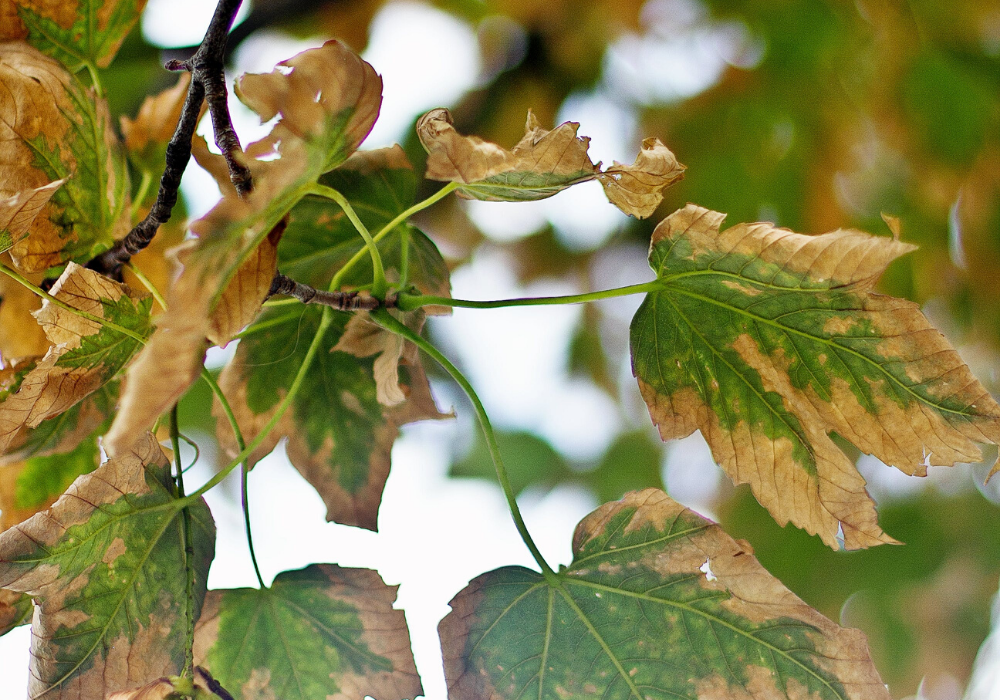
Before trees drop leaves, they start to reclaim what they can. Leaves contain nutrients that trees can reuse, so the tree breaks down chlorophyll and reallocates resources back into twigs and roots. Scientists describe leaf senescence as a strategy that helps trees recover nutrients before leaf fall.
That’s why you see color change first and leaf drop second. In Maryland, the exact timing varies each year based on weather patterns, but the biological goal stays the same: save what’s valuable, then let the leaf go.
Why Do Some Maryland Trees Keep Their Leaves Through Winter
If you’ve noticed oaks (and sometimes beeches) holding tan leaves well into winter, you’re not imagining it. This behavior has a name: marcescence.
Marcescence happens when leaves remain attached after they die, often through much of winter, and then drop as buds swell in spring. Extensions often point out that oaks commonly retain leaves longer than many other species.
In practical terms, this is usually normal, especially on younger oaks or lower branches. You’ll often see it in Maryland neighborhoods with mixed hardwoods, along wooded edges, and in yards where oaks dominate the canopy.
Why Evergreens Don’t Go Bare Like Maples and Oaks
If you’re wondering why evergreens don’t lose their leaves, it’s because they keep foliage through winter, but they don’t ignore” winter stress. Needles and scales help them manage it differently.
Evergreen foliage typically has:
- smaller surface area than broad leaves,
- waxy coatings that reduce water loss,
- structures that tolerate cold better than thin deciduous leaves.
Evergreens still lose some moisture in winter, especially during windy, dry spells. That’s why you can see winter burn on hollies, arborvitae, or certain pines after harsh weather.
What Is Normal for Leaf Drop in Maryland and When It Signals a Problem
Most leaf drop is seasonal and healthy. But sometimes trees drop leaves early because stress forces them to conserve resources.
In Maryland, you should feel comfortable when you see:
- normal fall-to-early-winter leaf drop,
- healthy buds set on branches (buds look plump and firm),
- oak leaves hanging on in winter without other symptoms.
You should pay closer attention if you notice leaf drop that looks out of season or repeat patterns year after year. For example, when a tree drops leaves in late summer, thins suddenly, or shows dieback at branch tips, stress often drives the change.
Common Maryland stressors include summer drought that carries into fall, compacted clay soils, root damage from construction or trenching, and salt exposure near roads and driveways.
If you’re unsure, an arborist can tell you whether your tree is following normal seasonal biology or responding to a health issue.
When You Should Call an Arborist in Maryland
Leaf drop is a natural seasonal process and helps explain why trees lose their leaves in winter. However, early leaf loss or damaged branches may signal a problem.
Nelson Tree Specialist offers professional tree evaluations in your local area. Call 301-202-1613 or use our online contact form to schedule an inspection before winter storms arrive.