
After a tree comes down, many Maryland homeowners are left with heavy logs, branches, wood chips, or stump grinding debris. That often leads to one question: how do you get rid of logs without damaging the yard or wasting usable wood?
The best option depends on the size of the logs, the condition of the tree, your yard access, and whether you want to keep the wood. Some logs can be split for firewood. Others should be hauled away, chipped, or handled carefully because of pests, decay, or disease.
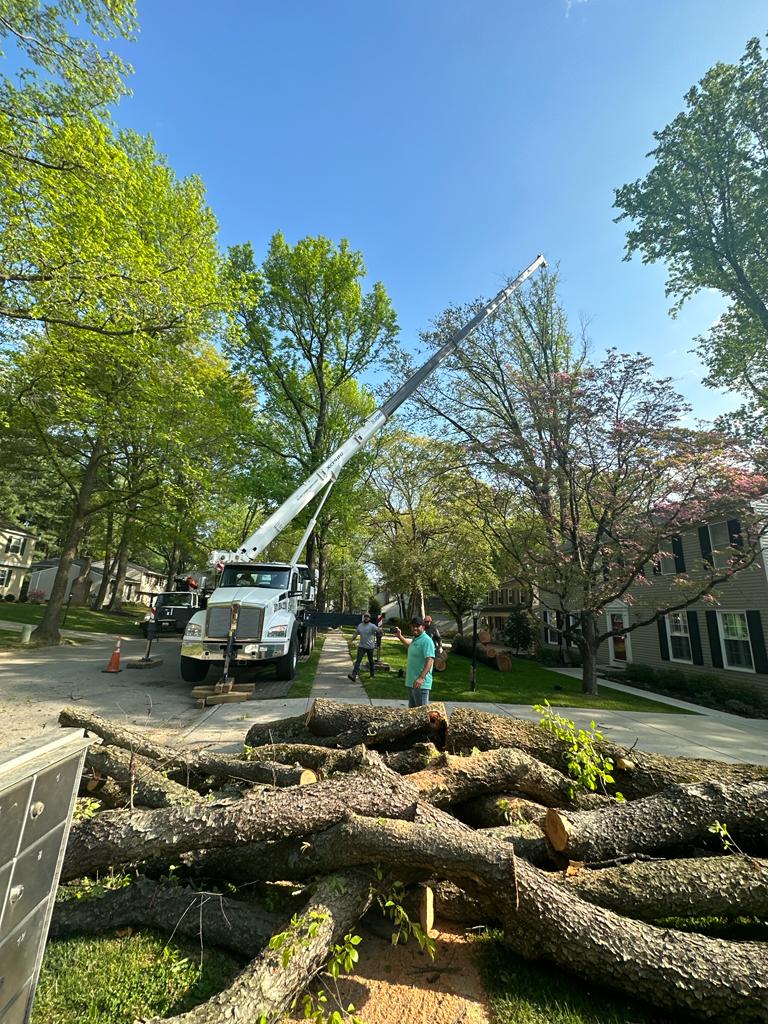
Why Leftover Logs Need a Plan
Logs may appear harmless once they are on the ground, but large trunk sections can damage turf, block driveways, attract insects, or become more difficult to move once they settle into the soil.
Before tree removal begins, ask what will happen to the remaining wood. A tree care crew may be able to cut logs into smaller pieces, stack usable firewood, chip branches, grind the stump, or haul debris away.
Planning ahead helps protect your lawn, landscaping, driveway, and nearby structures from unnecessary damage.
How Do You Get Rid of Logs Safely?
The safest way to remove logs depends on their size and weight. Small logs may be easy to split, stack, or reuse. Large trunk sections often require equipment, especially near fences, gardens, slopes, patios, or homes.
Avoid rolling or dragging heavy logs across your yard. They can tear up grass, damage irrigation lines, crack hardscaping, or shift unexpectedly. Freshly cut logs can also weigh more than many homeowners expect.
If the logs are too large to move safely, professional tree log removal is usually the better option. A trained crew can cut, move, haul, or stack the wood without creating more damage around your property.
Can You Use Logs for Firewood?
Many homeowners keep logs for firewood after tree removal, especially from hardwood trees like oak, maple, or hickory. This can be useful, but freshly cut wood needs time to dry before it burns well.
Split the logs, stack them off the ground, and allow air to move through the pile. Keep firewood away from your home, garage, shed, and wooden fences to reduce moisture and pest concerns.
Do not burn painted, treated, rotten, or contaminated wood. If the tree showed signs of disease or heavy insect activity, ask a certified arborist whether the wood is safe to keep. To help prevent the spread of invasive pests, keep and burn firewood locally whenever possible.
What About Wood Chips and Stump Debris?
Tree removal often leaves more than logs. Branches and smaller limbs may be chipped on-site. Wood chips can help suppress weeds and protect soil, but they should be spread in a shallow, even layer and kept away from tree trunks.
If stump grinding is part of the job, you may also have wood shavings mixed with soil. Some homeowners use this material to fill the stump area, but it can settle over time. For a cleaner finish, ask about removing the grindings and preparing the area for topsoil, seed, sod, or new landscaping.
Ask About Tree Removal Cleanup Before the Job Starts
Tree removal cleanup can prevent surprises after the tree is gone. Some jobs include full debris removal. Others may leave logs, chips, or stump grindings behind unless you request additional service.
Before work begins, ask whether the crew can remove large logs, cut and stack firewood, chip branches, grind the stump, or haul away debris. Clear expectations help you choose the best cleanup option for your property.
Get Help with Logs and Tree Cleanup in Maryland
So, how do you get rid of logs after tree removal? Some logs can be split and seasoned for firewood. Others should be chipped, hauled away, or removed to protect your yard, nearby trees, and property.
Nelson Tree Specialist helps Maryland homeowners with professional tree removal and cleanup services in Maryland. Contact us today for a free quote.