
You spot it when the leaves drop. A branch that looked fine in summer suddenly shows a hard, black, warty swelling that seems to grow right out of the bark. In Maryland, that “black fungus” is often black knot, a fungal disease that targets Prunus trees like plum, cherry, flowering almond, apricot, and blackthorn.
Here’s the updated truth: you don’t wash black knot off, and sprays don’t fix it. You control it by pruning out infected wood correctly and cleaning up before the spring spore season kicks in.
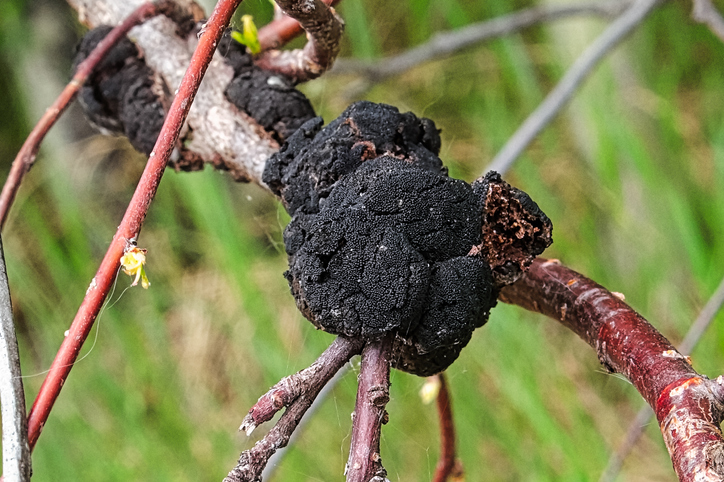
What black knot looks like (and how it spreads)
Black knot starts subtly. The first symptoms often show up in the fall as small swellings on twigs. The next growing season, those swellings enlarge, darken, and eventually form the familiar black galls. The surface can split and crack, and the branch beyond the gall often dies back and fails to leaf out.
The fungus spreads most aggressively when wet spring weather helps spores travel and infect fresh growth. That’s why timing matters so much in Maryland.
Make sure it’s black knot (not another “black” problem)
Homeowners call a lot of issues “black fungus.” Before you start cutting, make sure you’re looking at raised, hard, warty galls that look like a knot on the branch.
If you see a black coating on leaves or twigs that looks like soot and smears when you rub it, you may be dealing with sooty mold instead (usually linked to honeydew from insects). That needs a different plan than the black knot.
When you see sunken bark, cracking, or oozing without that classic knobby gall, you could be looking at a canker or another stress-related issue. If you’re unsure, an arborist visit saves time and prevents “wrong-problem” pruning.
The Maryland timing that makes or breaks your results
Black knot control is easiest when the tree is dormant because you can see the galls clearly and remove them before spring spread.
University of Maryland Extension recommends you prune out infected stems and branches and remove the clippings from the landscape before April 1. That one cleanup detail matters because infected debris can keep the disease cycling.
How to prune black knot correctly (step-by-step, without guesswork)
Start with a full inspection
Walk around the tree and look at it from multiple angles. Black knot often shows up in more than one spot, especially if the tree has carried the disease for a couple of seasons.
Cut far enough below the gall
This is where many DIY attempts fail. It is advised to prune at least 4 inches below the galls. Don’t “shave” the knot off. Don’t cut right at the swelling. You need a clean removal below it.
Remove the debris immediately and get it off-site
After you cut, don’t leave infected branches under the tree or tossed in the woods line. Bag them and dispose of them properly so they can’t keep producing spores.
Disinfect tools as you work
Tool sanitation won’t replace good pruning, but it helps reduce the spread when you make multiple cuts. Disinfect between cuts on infected material.
Do fungicides work on black knot?
For Maryland landscapes, “Chemical controls are not effective.”
Fungicides don’t work well on black knot because they can’t cure what you already see. Once that black, knobby gall forms, the fungus is inside the wood, and sprays won’t remove or shrink it. In some cases, fungicides only act as prevention on new growth and require perfect timing, but in a typical Maryland yard, they won’t fix the problem without the real solution: prune out infected branches and remove the debris from the site before the spring spread season.
When pruning isn’t enough (and removal becomes the smarter option)
Sometimes, black knot gets established where pruning can’t truly solve the problem. Consider removal (or at least an arborist assessment) when:
- Knots appear on major scaffold limbs or near the trunk, and you can’t remove them without harming the structure
- The tree shows repeated reinfection year after year
- Dieback spreads, and the tree becomes a safety risk
At that point, you’ll usually get better results by removing the tree and addressing nearby sources.
Stop it from coming back in your yard
Black knot often returns when an infected source stays nearby. Infected wild plum and black cherry commonly serve as sources of new infections. If you have Prunus trees along a fence line, creek buffer, or wooded edge, you may need to identify and remove infected wild hosts where practical.
You also help your tree resist disease pressure when you keep it vigorous. Good pruning for airflow, avoiding bark damage, and staying on top of drought stress all matter in Maryland’s hot summers and wet spring swings.
When to call Nelson Tree Specialist
Call in a pro if you see knots high in the canopy, if the infected limbs require ladder work, or if you suspect nearby wild host trees keep reinfecting your ornamentals or fruit trees. A certified team can confirm the diagnosis, prune safely, and build a plan that actually breaks the cycle.
If you want help with pruning, disease diagnosis, or tree removal in Maryland, contact Nelson Tree Specialist at 301-854-2218 or request a quote.