

Planning a new garden bed near a massive oak? Before you grab a shovel, you should understand what lies beneath the soil.
Many Maryland homeowners misunderstand how tree roots and the root system of a tree actually function. This confusion often leads to accidental tree damage during spring landscaping projects. To help you protect your property and keep your landscape thriving, our ISA Certified Arborists answer the top three questions we hear about the roots of trees.

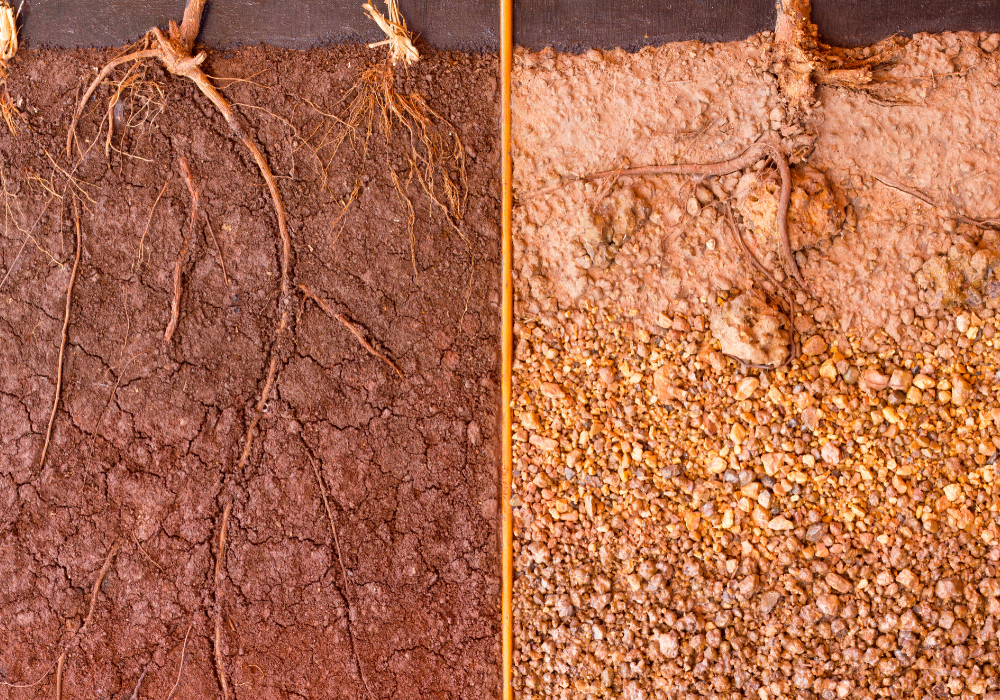
Question 1: How Far Do Tree Roots Spread?
A common misconception says a root system only grows as wide as the leafy canopy above it. In reality, trees often push their roots well beyond the edge of the branches.
So, how far do tree roots spread? In their search for moisture and vital nutrients, the roots of trees often spread horizontally two to three times the width of the canopy in favorable conditions. This means a mature tree in your front yard can send its tree roots under a driveway, into planting beds, or across property lines.
Question 2: Do Deep Roots Make a Healthier Tree?
People often assume that massive shade trees anchor themselves with incredibly deep root systems. However, deep roots do not automatically equal a healthier tree.
In most yards, tree root depth is surprisingly shallow because trees rely heavily on “feeder roots” to gather the moisture and nutrients they need to survive. In many parts of Maryland, heavier clay soils and seasonal moisture keep many of the most active feeder roots within the top 12 to 18 inches of the ground. This shallow depth helps tree roots access oxygen, rainwater, and decomposing organic matter more efficiently.
Question 3: Do All Trees Have Taproots?
A taproot serves as the central, dominant root that grows directly downward into the earth, with smaller roots sprouting laterally from it.
So, do all trees have taproots? While a taproot can help with early anchoring, many shade and fruit trees rely more on spreading lateral roots as they mature. Some species common in Maryland, including oaks, hickories, walnuts, and certain pines, can be more sensitive to root disturbance once established. If you plan to transplant one of these trees, a professional arborist can help reduce stress and improve survival.
Keep Your Trees Healthy with Nelson Tree Specialist
Understanding tree roots and the root system of a tree is the first step in proper landscape maintenance. If you plan to build a home addition, install a new patio, or plant heavy shrubs near a mature tree, you need expert guidance to avoid damaging unseen feeder roots.
Nelson Tree Specialist provides comprehensive tree care services, health evaluations, and consulting across the Maryland, DC, and Virginia metro area.
Request a Tree Health Consultation or call us today at 301-854-2218 to ensure your next landscaping project keeps your trees safe and healthy.