

Tree leaves should stay green throughout the growing season, so when they start turning brown, it often raises concern. Many Maryland homeowners notice this change during warmer months or periods of inconsistent rainfall, when trees begin to show signs of stress earlier than expected.
In most cases, tree leaves turning brown does not mean the tree is dying. It usually signals that something is affecting how the tree takes in or moves water. Identifying the cause early can help prevent further decline and protect the long-term health of your tree.

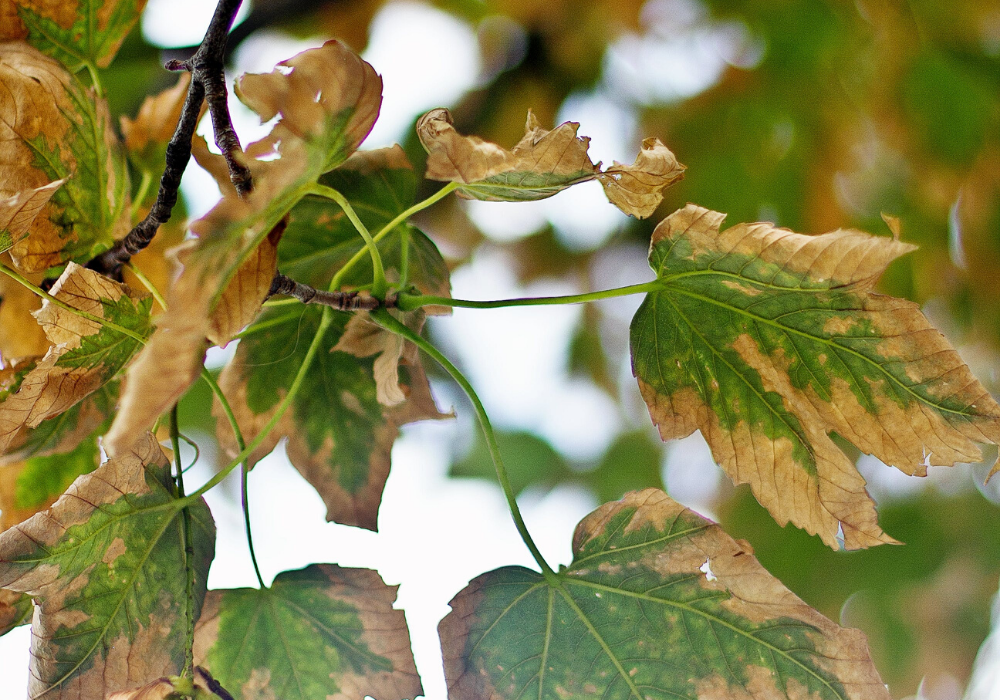
Common Reasons Tree Leaves Turn Brown
Several factors can cause tree leaves to turn brown, especially in residential landscapes across Maryland.
Heat and Drought Stress
Heat and dry conditions are among the most common causes. When soil moisture drops, trees cannot move enough water to their leaves. This often leads to browning along the edges or tips.
Even during humid Maryland summers, trees can still experience drought stress if rainfall is inconsistent or watering does not reach deep into the root zone.
Leaf Scorch
Leaf scorch develops when leaves lose water faster than the roots can supply it. You may notice brown edges while the center of the leaf remains green at first.
Although it can look severe, leaf scorch is usually caused by environmental stress rather than disease.
Pests and Disease
Insects and disease can also cause leaves to discolor or decline. Unlike drought stress, these issues often appear uneven across the tree. You may see spotting, holes, or patchy damage before leaves turn fully brown.
Warm and humid conditions in Maryland can make certain pests and diseases more active during the growing season.
Root Stress and Soil Conditions
Tree roots need space, oxygen, and access to moisture. Compacted soil, nearby construction, and heavy foot traffic can limit root function. When roots cannot absorb water properly, leaves may turn brown even when the soil surface looks moist.
Transplant Shock
Newly planted trees are more vulnerable to stress. Their root systems are still developing, so they may struggle to keep up with changing moisture and temperature conditions. Browning leaves are a common response during the first growing season.
What Brown Leaves Can Tell You About Tree Health
The way leaves turn brown can reveal what is happening inside the tree.
If browning appears mainly along the edges, it often points to heat or water stress. If entire leaves turn brown quickly across large areas, the tree may be dealing with more serious moisture or root issues. When only one section of the tree is affected, the problem may be localized.
Paying attention to these patterns can help you determine whether the issue is temporary or something that needs closer attention.
When Brown Leaves Are Normal vs a Warning Sign
Not every case of brown leaves signals a serious problem.
Mild browning during short periods of stress can be temporary. Trees often recover once conditions improve. However, some signs indicate a deeper issue:
- Widespread browning across the canopy
- Early or excessive leaf drop
- Dead or brittle branches
- Repeated problems each year
- No improvement after watering or care
When these symptoms appear together, the tree may be under ongoing stress or beginning to decline.
Why Maryland Trees Often Experience This Problem
Trees in Maryland face a mix of environmental challenges. Heat, humidity, and uneven rainfall can all affect how trees manage moisture. In many residential areas, compacted soil and limited root space make it even harder for trees to stay healthy.
These conditions often combine, which is why tree leaves turning brown is rarely caused by just one issue.
How to Help Trees Recover
Supporting a stressed tree starts with improving its growing conditions.
Water deeply instead of applying frequent light watering. This allows moisture to reach the root zone where it is needed most. Apply mulch around the base to help retain soil moisture, but keep it away from the trunk.
Avoid disturbing the roots and limit heavy pruning during periods of stress. Monitor the tree over time to see whether conditions improve.
When to Call a Tree Professional
If the cause is unclear or the problem continues to spread, a professional evaluation can help identify the issue early.
This is especially important for large or mature trees, where hidden problems can develop below the surface. A qualified arborist can determine the cause and recommend the right solution.
What Brown Leaves Can Mean for Tree Health
Tree leaves turning brown is often a sign of stress rather than immediate decline. In Maryland, changing moisture levels, heat, and soil conditions frequently play a role.
If you notice ongoing browning, early leaf drop, or signs of decline, Nelson Tree Specialist can help assess the situation and recommend the right next steps to protect your trees.