


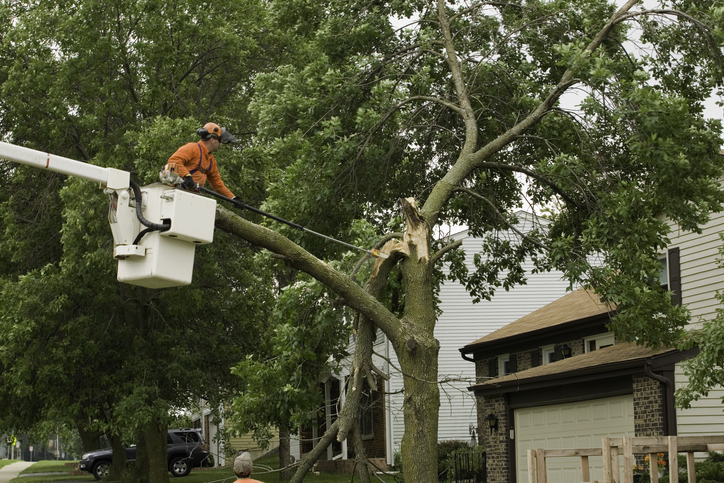
A broken or hanging limb after a storm can feel urgent and stressful. You want to know if everyone is safe, if the tree will survive, and whether you need emergency tree service.
In Central Maryland, fast-moving storms, heavy, wet snow, and clay-heavy soils make broken branches common. This guide shows you exactly what to do when a tree branch breaks, plus how to help your tree recover and prevent future damage.
Quick Checklist: What to Do First
If you’re looking at a broken tree branch right now, do this:
- Keep people and pets away from the area under the damaged limb.
- Look for hanging or “caught” branches that could still fall.
- Stay away from any wires the branch touches and call the utility.
- Do not use ladders, climb the tree, or cut overhead with a chainsaw.
- Only handle small, low branches you can safely reach from the ground.
- Call an ISA-certified arborist for heavy, high, or risky branches.
Once you secure the scene, you can decide what to handle and what to leave to a professional.
Step 1: Make the Area Safe
Start by protecting people, not the tree.
Block off the space under the broken limb so kids, pets, and vehicles stay clear. Scan the canopy for cracked or hanging branches that might drop later. If you see a limb on or near a power line, back away and call the utility company. Treat the line as live.
Skip ladders, roof access, and climbing. Storm-damaged wood shifts without warning, and most serious injuries happen when people work above their heads. If the situation feels unstable or unpredictable, stop and call a tree service.
Step 2: Check the Damage From the Ground
After you secure the area, check the damage without leaving the ground.
Look at the size of the limb, where it broke, and what sits underneath it. A small branch near the ground is low risk. A heavy limb over a roof, driveway, or fence is not. Note the tree’s overall condition. In many Central Maryland yards, mature oaks, maples, tulip poplars, and cherries grow in clay soils, so they carry heavy canopies and stress points that fail in wind or ice.
If the damaged branch is large or the tree matters for shade, privacy, or curb appeal, plan on a professional assessment instead of guessing.
Step 3: Decide What You Can Do Yourself
Most homeowners should only handle light cleanup. Use a simple rule: if you can’t reach it safely from the ground with hand tools, call a pro.
You can usually:
- Pick up small branches and twigs from lawns, walks, and driveways.
- Cut very small, low branches (about wrist-size or smaller) with hand pruners or a small pruning saw.
- Make a clean cut just outside the branch collar so the tree can seal the wound.
You should call an arborist when:
- The branch hangs or wedges high in the canopy.
- The limb is heavy or sits over a home, driveway, vehicle, or play area.
- You need a ladder, roof access, climbing gear, or a chainsaw.
- The branch is near wires, sheds, fences, or property lines.
If you wonder, “Is this too big or too risky?” assume yes and bring in a professional.
Step 4: Decide if You Keep or Remove the Tree
A broken branch doesn’t always mean you need to remove the tree. You decide based on structure and safety, not just appearance.
You typically keep the tree if:
- The trunk stays intact with no major splits or deep cracks.
- The tree still has plenty of healthy canopy.
- The tree stands upright and doesn’t lean toward a target.
You often remove the tree if:
- The main trunk splits or large cracks appear.
- Several major limbs fail on one side, and the tree leans more than before.
- The tree already has decay, hollow sections, or previous serious damage.
- The tree now poses a high risk to a house, driveway, or high-use area.
An ISA-certified arborist can inspect the tree, explain the risk, and recommend pruning, cabling, or removal.
Step 5: Help Your Tree Recover
If you keep the tree, support its recovery over the next months and seasons.
Skip wound paint and sealers. Clean cuts without coatings let the tree close the wound on its own. During dry spells, water deeply so roots and canopy recover. Add two to three inches of mulch, but keep it off the trunk flare so the bark doesn’t rot.
Avoid heavy fertilization right after storm damage. Fast, forced growth often creates weak branches. Instead, schedule follow-up structural pruning with an arborist. They can remove risky limbs, balance the canopy, and lower the chance of another large break.
Take photos of the damage and keep records of professional work for your own files and for insurance.
Why Tree Branches Break So Often in Central Maryland
Branch failures happen often here because of how the weather and soil work together.
Central Maryland storms bring fast wind gusts that hit full canopies. Nor’easters and coastal systems pile on long periods of wind and soaking rain. In winter, heavy, wet snow and ice stick to branches and add weight. Clay-heavy soils hold water and loosen root grip, so trees sway more during storms.
Mature shade trees near homes and streets often have old wounds, poor pruning cuts, or weak branch angles. These weak points break when storms hit. Regular inspections and pruning reduce these risks.
How to Prevent Broken Branches Before the Next Storm
You can’t control the weather, but you can prepare your trees.
Schedule structural pruning every few years. Arborists remove dead wood, rubbing limbs, and weak attachments before they fail. Keep branches pruned back from roofs, driveways, and play sets so a branch doesn’t land on something important.
For certain mature trees, ask about cabling and bracing. Support systems reduce stress on heavy limbs and weak crotches. Also, book periodic tree risk assessments, especially for large trees close to your home. Catching decay, root problems, and structural issues early almost always costs less than emergency cleanup.
Need Help With a Broken Tree Branch in Central Maryland?
If you’re dealing with a broken tree branch after a storm or you want to prevent the next big break, Nelson Tree Specialist can help. Our ISA-certified arborists provide:
- Emergency storm cleanup and hazardous limb removal
- Structural and clearance pruning around homes and driveways
- Tree risk assessments for mature shade and ornamental trees
- Long-term care plans to keep your trees safer and healthier
Contact us to schedule service in Central Maryland or request a quote online. We focus on safety, property protection, and long-term tree health, so you can feel more confident every time the wind picks up.